

Preimplantation genetic testing (PGT), also known as prenatal genetic screening, refers to testing embryos for chromosomal abnormalities or specific inherited genetic conditions before transfer.
How Testing Is Performed
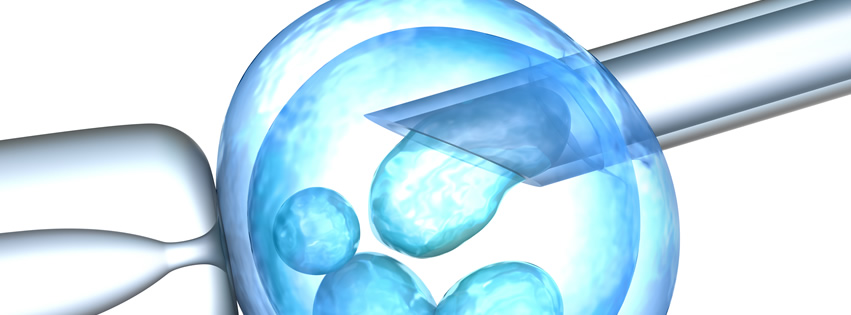
We perform this testing using a technique called a trophectoderm biopsy. During this process, a small sample of cells is taken from the part of the embryo that will develop into the placenta (not the fetus). Using high-powered magnification and a precise micro-laser, embryologists carefully separate a few cells for analysis. The cells are then sent for genetic testing, while the portion of the embryo that becomes the fetus remains untouched.
In experienced hands, this procedure is safe and does not harm the embryo or reduce its ability to implant. In fact, selecting chromosomally normal embryos significantly improves pregnancy rates compared to choosing embryos based on appearance alone. Our team has been performing this procedure since 2014 and has extensive expertise in this technique.
PGT and Single Embryo Transfer
PGS allows us to identify a single, chromosomally normal embryo for transfer. This supports elective single embryo transfer, which reduces the risk of multiple pregnancies. Multiple pregnancies carry higher risks, including preterm labor, premature delivery, cesarean delivery, and complications such as gestational diabetes and pregnancy-induced hypertension.
Recurrent Miscarriage and Failed IVF Cycles
Many miscarriages and failed IVF cycles are caused by chromosomal abnormalities. Patients with recurrent pregnancy loss or prior unsuccessful IVF attempts may benefit from PGT with trophectoderm biopsy.
Chromosomal abnormalities are common—affecting up to 50% of embryos, even in younger patients—and increase with maternal age, particularly after age 35. These abnormalities are associated with lower pregnancy rates, higher miscarriage rates, and an increased chance of conditions such as Down syndrome (trisomy 21). PGT helps reduce these risks by identifying embryos without chromosomal abnormalities.
Preventing Genetic Disorders
If both partners are carriers of a genetic condition, such as cystic fibrosis, specialized testing can identify embryos that are unaffected. A reproductive genetics laboratory develops targeted probes to detect specific conditions, allowing us to select embryos that do not carry two copies of the disease-causing gene. Standard chromosomal screening is also performed to ensure the selected embryo is chromosomally normal.
Next-Generation Sequencing (NGS)
We use next-generation sequencing (NGS), an advanced method that analyzes all chromosomes in detail. NGS can detect mosaicism, a condition in which an embryo contains a mix of normal and abnormal cells. Mosaicism may affect implantation success and increase the risk of miscarriage.
Older testing methods, such as array comparative genomic hybridization (aCGH), cannot reliably detect mosaicism and may incorrectly classify some embryos as normal. NGS provides more accurate and comprehensive results.
Frozen Embryo Transfer (FET)
Because NGS testing takes several days, embryos are frozen immediately after biopsy and transferred in a later cycle. This process, known as frozen embryo transfer (FET), does not require ovarian stimulation.
Modern freezing techniques, particularly vitrification, allow embryos to survive freezing and thawing at very high rates. Transferring a chromosomally normal embryo into a well-prepared uterine environment—without the elevated hormone levels of a stimulation cycle—can result in improved pregnancy rates above that of untested embryos.
For more information about preimplantation genetic screening, read an ASRM fact sheet.